
From Video Observation to Clinical Reasoning in Speech and Language Therapy
Healthcare • 16 minute read

13 May 2026 • 16 minute read

José Francisco Cervera •
13 May, 2026
Healthcare • 16 minute read
13 May 2026 • 16 minute read
José Francisco Cervera •
13 May, 2026
José Francisco Cervera-Mérida, PhD is a speech and language therapist and lecturer at the Catholic University of Valencia San Vicente Mártir (UCV) where he prepares students for their Bachelor’s Degree in Speech and Language Therapy.
The experience described in this article took place within the Language Pathology I module of the Speech and Language Therapy degree programme.
The main objective was to introduce students to clinical reasoning from the first year onwards through the systematic analysis of clinical videos, using Codimg Hub and automated feedback systems based on artificial intelligence.
We thank José Francisco for taking time out of his busy schedule to create this case study.
Learning to think clinically is one of the biggest challenges for healthcare students.
They can, for example, study all the definitions, classifications and descriptions of various disorders, but still encounter difficulties when faced with real-life cases.
Recognising clinical signs in a patient, distinguishing what is relevant from what is not, justifying an observation or making semiological decisions is a far more complex process than simply memorising theoretical content.
In speech and language therapy, this difficulty is particularly evident.
New students often struggle to translate theoretical knowledge into structured clinical observations. They may know the definitions of an aphasic disorder, a pragmatic impairment or a problem with intelligibility, but that does not guarantee they will be able to identify these signs in a real clinical setting.
Because of this need, we developed a teaching experience centred on the systematic analysis of clinical videos, using Codimg Hub and artificial intelligence as learning support tools.
The aim was not merely for students to ‘watch videos’, but to progressively train clinical reasoning through structured observation, semiological categorisation and individualised corrective feedback.

Traditionally, clinical video-based exercises tend to be limited in scope. In the majority of cases, this means that students watch a few videos during lectures and then offer general comments on what they consider relevant.
Our approach was different.
We designed an experience in which each student had to analyse clinical videos individually using a structured observation rubric.
Students could not simply “have a gut feeling” about the case but, instead, had to justify their diagnoses using specific clinical categories.
To this end, students were provided in advance with specific theoretical material developed for the course.
This material outlined the semiological definitions, categories of analysis and clinical criteria they had to use during the practical sessions. It was specifically designed for novice students - clear enough to facilitate initial learning, yet clinically precise and conceptually rigorous.
The aim was to reduce interpretative ambiguity without oversimplifying the complexity of clinical observation.
The intention was clear - to train students in a more systematic and less intuitive form of clinical observation.
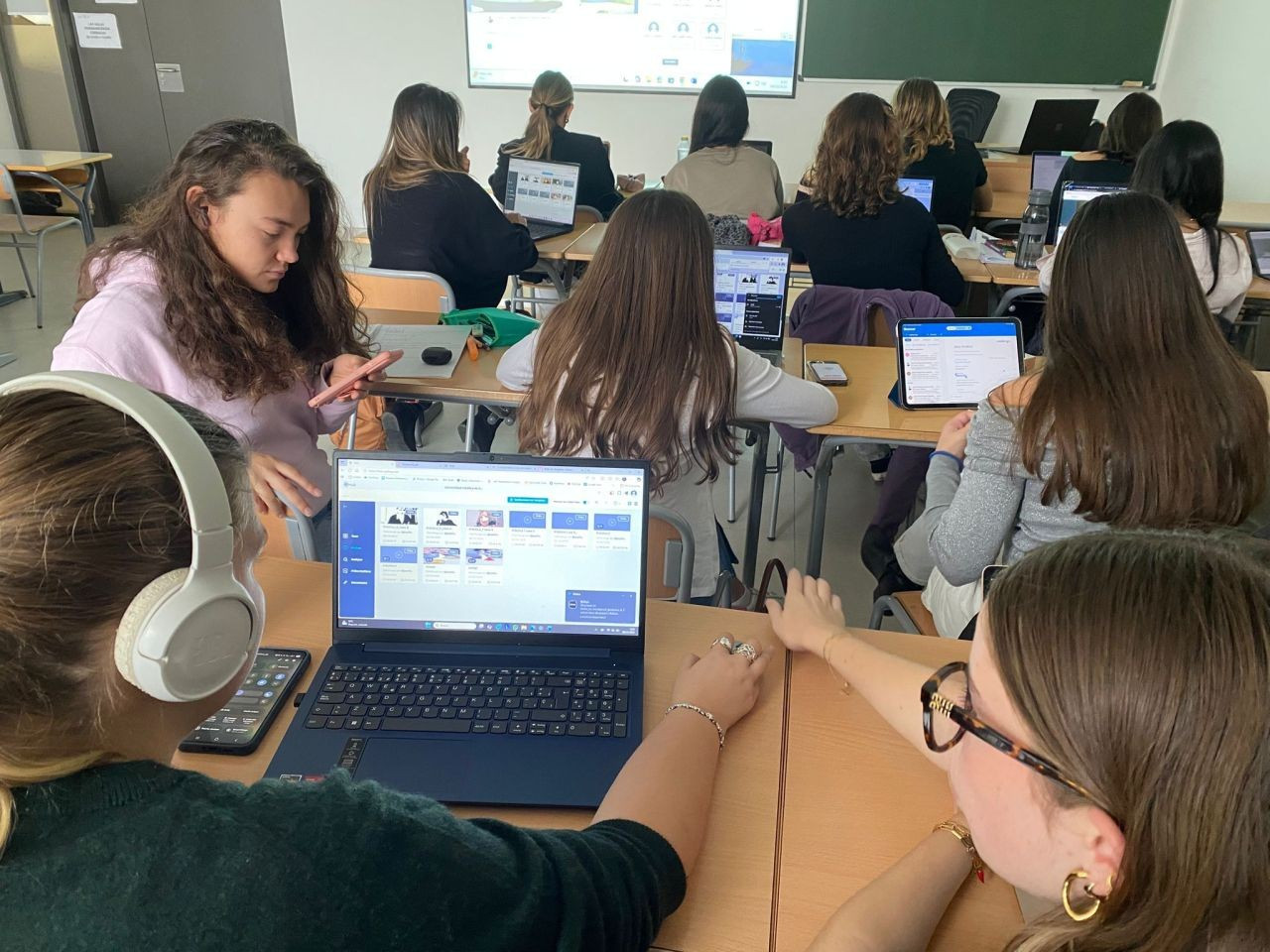
One of the most interesting aspects of this experience was discovering that clinical observation is not an automatic skill.
While watching the same video, different students identified different signs. Some over-interpreted irrelevant behaviours. Others overlooked key aspects of the case. Others used the correct clinical categories, but failed to adequately justify why these had been selected.
This allowed us to address a fundamental aspect of clinical training - that professional reasoning is not merely about ‘getting it right’, but also about constructing coherent and justified decisions.
The Codimg Hub platform made this process much easier. Every student was able to review clinical clips repeatedly, pause the footage, rewind and analyse the observed behaviours in greater detail.
Video ceased to be a passive resource and, instead, became a critical tool for analysis.
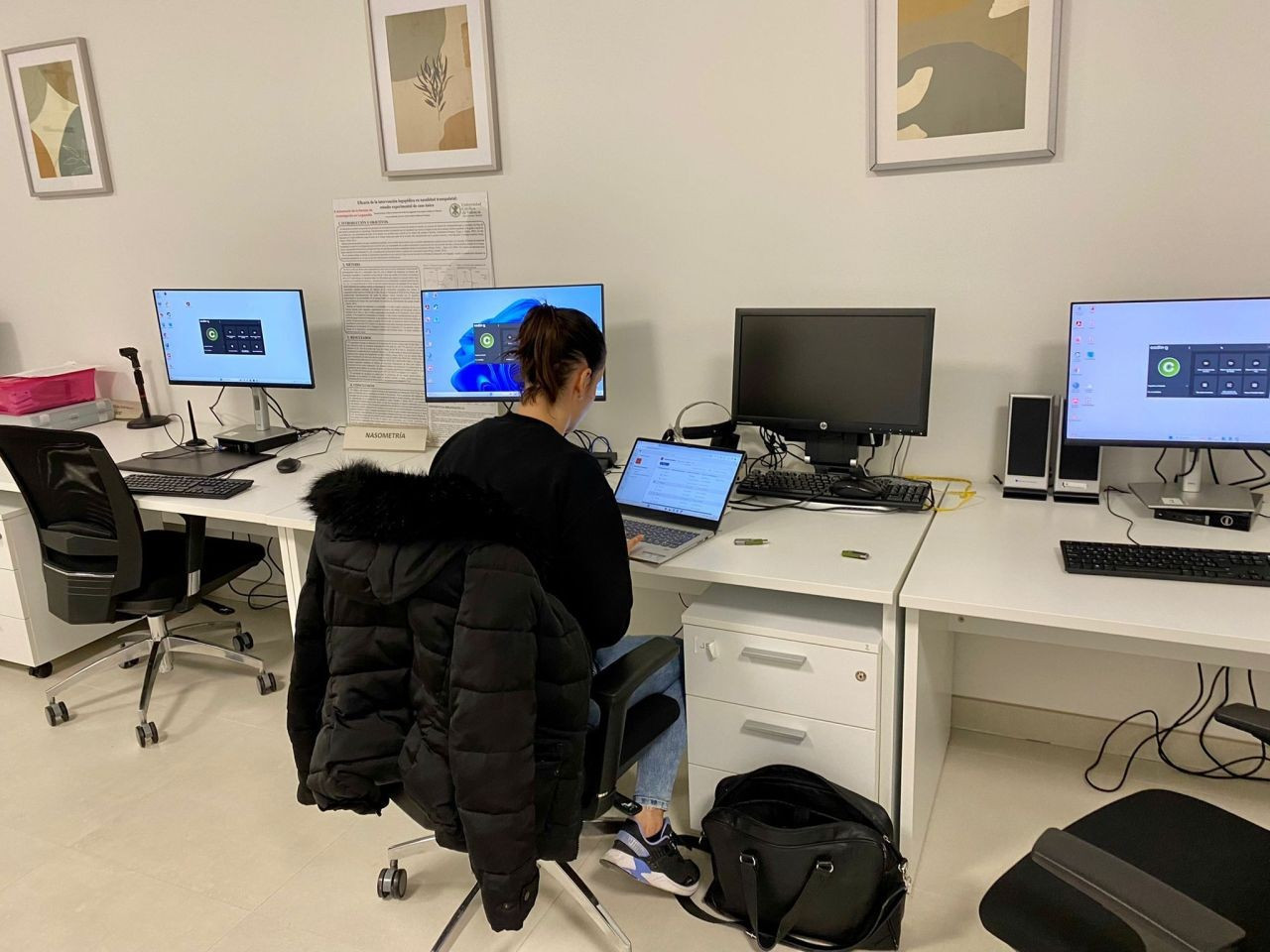
In previous years, organisational constraints meant that students undertook approximately five clinical analysis practical sessions during the semester.
The introduction of Codimg Hub allowed the number of practical sessions to be significantly increased, reaching up to twenty different clinical cases.
This increase had some very significant consequences.
Students were exposed to a wider variety of clinical profiles, were able to compare different disorders and, progressively, developed more refined observational skills.
Systematic repetition began to develop something significant - partial automation in observational reasoning.
As practical sessions progressed, students began to detect certain clinical signs more quickly and could justify their decisions more effectively.
In a sense, they were learning to observe clinically.
Another central element of this experience was the marking system.
After each clinical session, every student received individualised feedback that analysed, not only the final assessment, but also the quality of the student’s clinical reasoning.
The corrections included:
For example, a correction might have indicated that a student correctly identified phonological signs and reduced intelligibility, but omitted relevant grammatical alterations in expressive language.
This type of feedback transformed the error into a concrete learning opportunity.
The aim was not merely to correct, but also to help the student understand how they were reasoning.
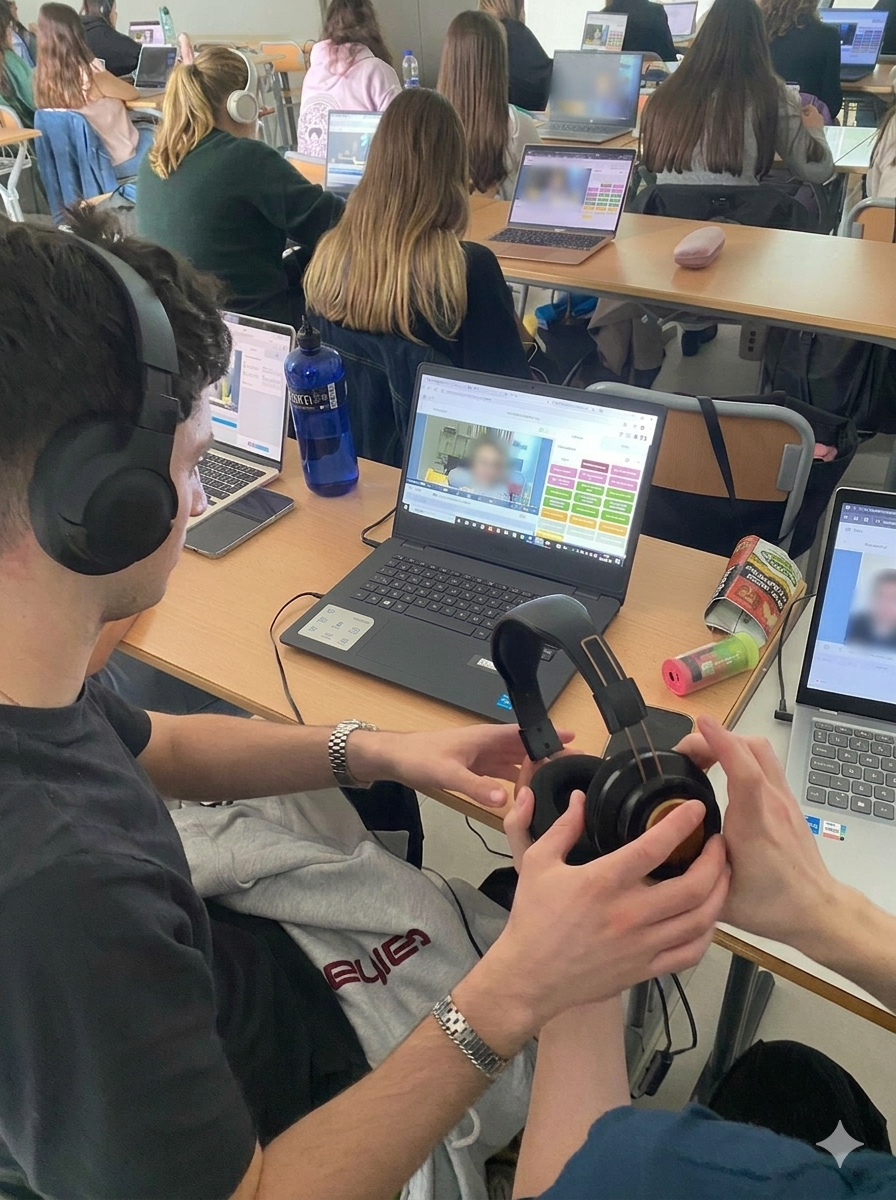
Artificial intelligence was not used directly by the students during practical sessions but it was used on the teaching side of the process.
For each of the twenty practical sessions, the lecturer utilised a previously drawn up reference matrix - a true gold standard - which defined the correct clinical categories expected in each video.
These matrixes served as a benchmark for assessing the students’ work.
Based on this expert matrix, a specific GPT was designed and trained for each clinical exercise.
The aim was not to generate generic responses, but to automate a highly accurate correction system consistent with the clinical criteria used in the course.
These GPTs were trained using actual answers from various students and fine-tuned until the desired level of accuracy, equivalent to those of the teacher, were achieved.
This was possible because the categorisation system used in Codimg allows for a highly structured comparison of:
When a student made a mistake, the GPT did not generate an improvised response. Instead, it referred directly to the theoretical material prepared by the teacher for the course, using the definitions and clinical explanations contained in those notes to justify the correction.
This meant that the feedback not only indicated the errors, but also why the error existed and which clinical concepts needed to be reviewed.
Each GPT automatically generated an individualised report for the student.
These reports highlighted:
One of the most interesting aspects was the reaction from the students.
The majority of students accepted the feedback with a high level of positivity because they perceived the corrections to be detailed, reasoned and useful for understanding their own errors.
Furthermore, the system had an invaluable impact on their education. Students revisited the theoretical material provided by the teacher to understand exactly why they had made particular mistakes.
Because of this, marking ceased to be merely an assessment and became an active extension of the learning process.
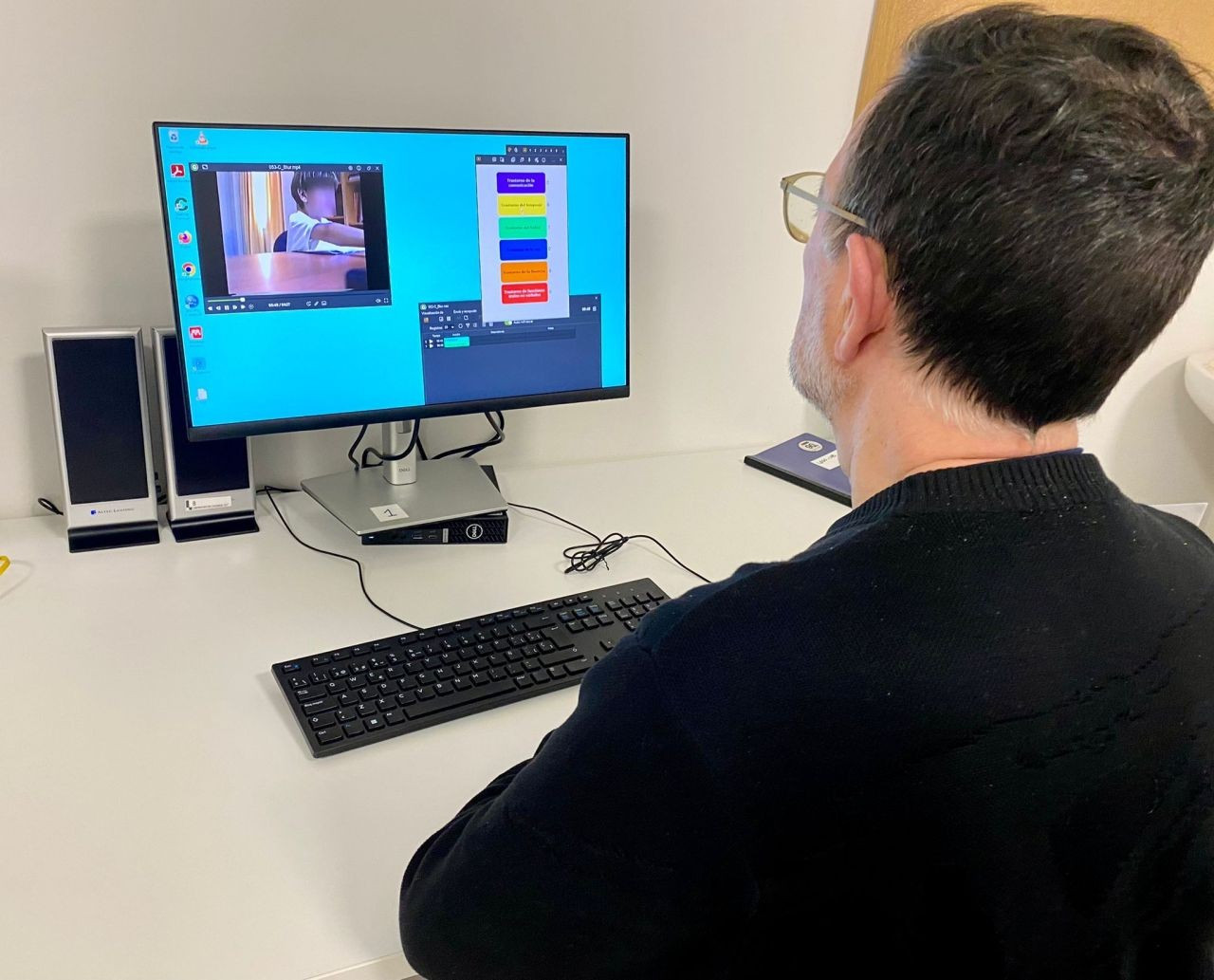
This project was also accompanied by a student satisfaction survey aimed at analysing how students felt about the learning process of using Codimg and the automated feedback system.
The results were particularly interesting as they showed a high rating for both the methodology and the perceived impact on clinical learning.
Students rated the following particularly highly:
Notably, many students described how the experience helped them develop what they themselves termed a “clinical eye”.
Open-ended responses revealed a consistently recurring theme - systematically observing and classifying clinical signals helped them to better understand what was happening to the patient and why.
Some comments illustrate this process very well:
“It has really helped me develop my clinical eye.”
“The Codimg platform has helped me see what we’re learning in a more realistic way.”
“It helps a lot because you see yourself in the situation in the video with the patient, and it helps you notice the little things that happen during a consultation.”
Other students highlighted that being able to label signals and symptoms directly on the video helped them understand theoretical concepts that they initially found abstract or difficult to grasp.
There were also useful suggestions for improving the system.
Some students mentioned initial difficulties in fully grasping the logic of the tagging or certain technical limitations regarding editing and navigation.
However, even in those cases, the overall perception remained clearly positive once use of the tools were understood.
One of the most interesting aspects was finding that students did not perceive Codimg simply as a technological platform, but as a different way of learning clinical practice.
Many comments specifically highlighted this sense of engaging with real-life consultation scenarios, the value of being able to analyse cases in a structured manner and, subsequently, receiving detailed constructive feedback.
Overall, the results suggest that the combination of these factors was received well by students:
Not only that, it also led to a clear sense of improvement in clinical reasoning and the ability to interpret real-life cases.
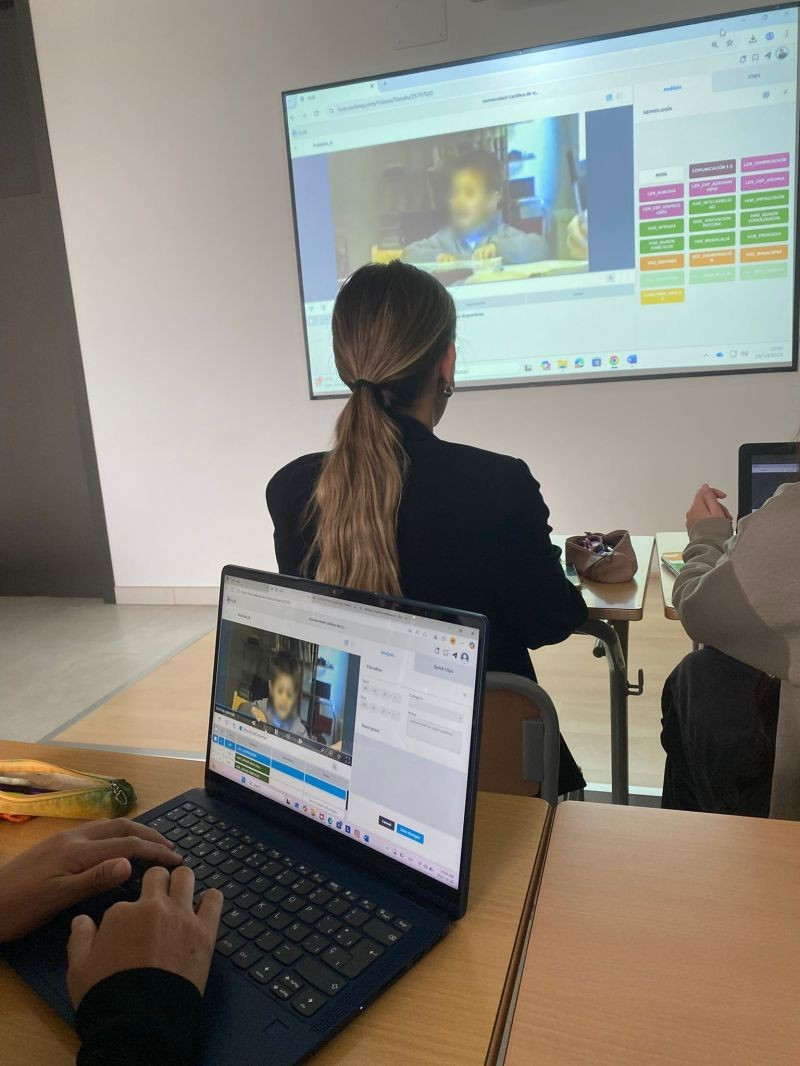
Although the experience utilised video, digital platforms and artificial intelligence, the primary objective was never technological.
The aim was pedagogical and clinical.
What mattered was not ‘using innovation’, but creating an environment where students could practise clinical observation, semiological analysis and reasoned decision-making intensively.
The images from the classroom reflected precisely this shift. Students worked simultaneously with laptops, tablets, mobile phones, headphones and handwritten notes whilst analysing real clinical videos.
The lecturer was no longer at the centre of the activity, and learning was distributed across multiple individual processes of observation and analysis.
The classroom began to resemble a clinical work environment more than a traditional lecture-style class.
The systematic analysis of clinical videos can become a very powerful training tool for teaching clinical reasoning to students of speech and language therapy, as well as other healthcare professions.
The experience showed that the combination of:
enabled the transformation of a passive viewing activity into an active process of clinical learning.
Because learning clinical practice is not just about knowing definitions.
It is, above all, about learning to observe, interpret and make decisions.
We would like to thank José Francisco Cervera-Mérida for taking the time out of his busy schedule to provide us with this fascinating insight into this project.
If you would like more information about Codimg and how it can aid the learning process, please don’t hesitate to get in contact with us. One of our video observation experts will assess your needs and set you up with a free, no-obligation trial so you can see the benefits for yourself.
Until then…
Thanks for reading.
The latest update to the Codimg Hub platform brings improved security with the introduction of multi...
Clinical simulation is now the gold standard for training healthcare professionals in a controlled a...
The latest and greatest version of Codimg is now available to download and install. The big...

Subscribe to our newsletter and receive a monthly compilation of articles, interviews and Codimg tips for video analysis.
Once a month, we'll send a compendium of our best articles, interview and advice, straight to your inbox. Enjoy!

 Cookie Consent Manager
Always active
Necessary cookies are required to enable the basic features of this site, such as providing secure log-in or adjusting your consent preferences. These cookies do not store any personally identifiable data.
Name |
Domain |
Duration |
PHPSESSID |
www.nacsport.com |
Session |
|
Cookies are small text files that are placed on your computer when you visit our website. They are used to save your activity history in our website so when you visit it again, we can identify you and configure the content based on your navigation habits, your identity and preferences. Cookies can be accepted, rejected, blocked and deleted. You can do this in the following options available in this window or by configuring your browser. |
||
Cookie generated by applications based on the PHP language. This is a general purpose identifier used to maintain user session variables. It is normally a random generated number, how it is used can be specific to the site, but a good example is maintaining a logged-in status for a user between pages.
No cookies to display |
Analytical cookies are used to understand how visitors interact with the website. These cookies help provide information on metrics such as the number of visitors, bounce rate, traffic source, etc.
Name |
Domain |
Duration |
_gid |
.nacsport.com |
a day |
|
Contains a unique identifier used by Google Analytics to determine that two distinct hits belong to the same user across browsing sessions. |
||
_gat_* |
.nacsport.com |
a minute |
|
Google Analytics Tracking, includes Google Universal Analytics Tracking-ID. |
||
_ga |
.nacsport.com |
a year |
|
Contains a unique identifier used by Google Analytics to determine that two distinct hits belong to the same user across browsing sessions. |
||
_ga_* |
.nacsport.com |
a year |
|
Contains a unique identifier used by Google Analytics to determine that two distinct hits belong to the same user across browsing sessions. |
||
Performance cookies are used to understand and analyse the key performance indexes of the website which helps in delivering a better user experience for the visitors.
No cookies to display |
Advertisement cookies are used to provide visitors with customised advertisements based on the pages you visited previously and to analyse the effectiveness of the ad campaigns. No cookies to display
No cookies to display |
Other uncategorised cookies are those that are being analysed and have not been classified into a category as yet.
Name |
Domain |
Duration |
webpSupport |
- |
Session |
|
- |
||


* Required fields

Our team has received your request and will contact you ASAP.